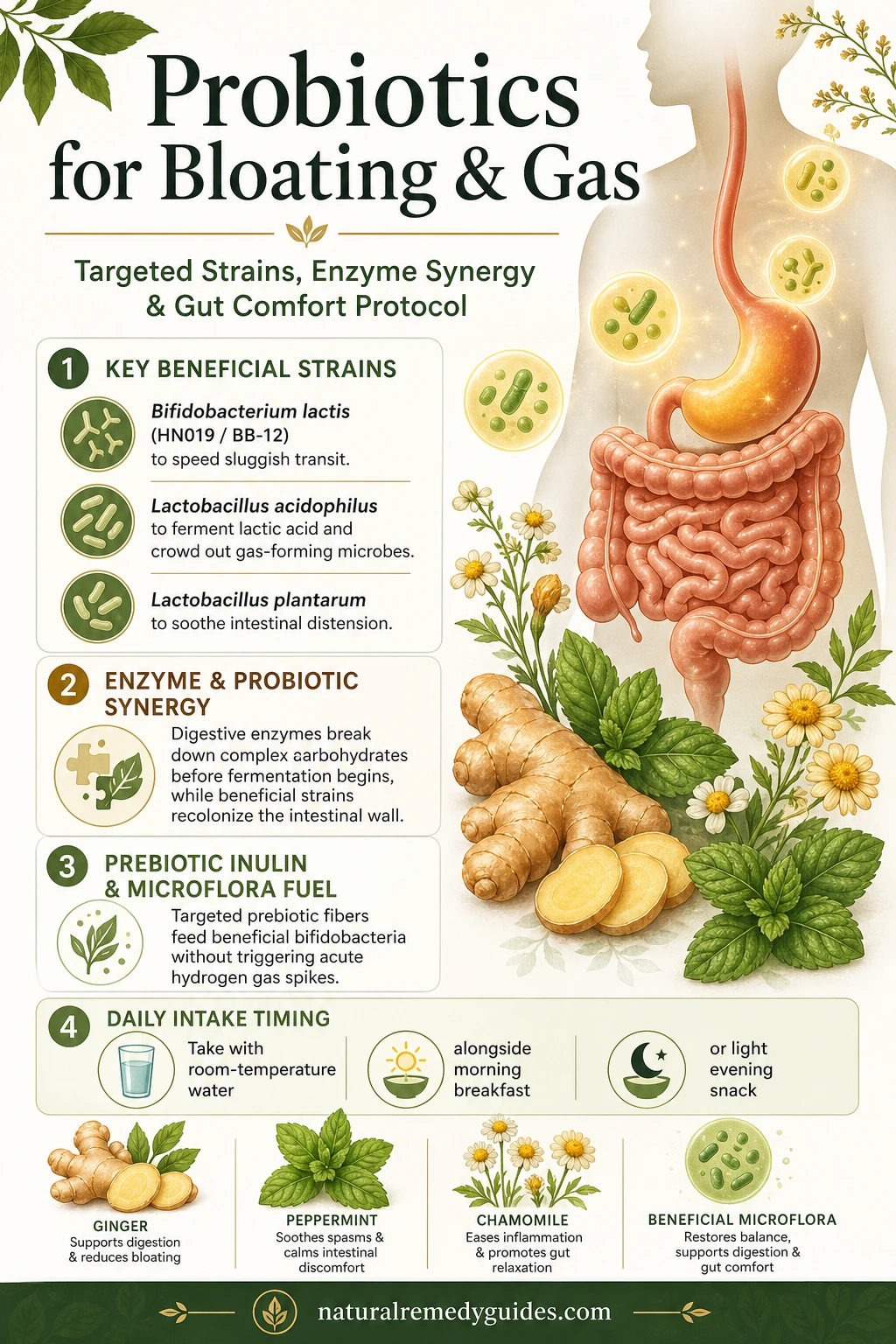
The Bottom Line: Persistent abdominal bloating and embarrassing gas are rarely random bad luck; they stem from sluggish intestinal transit and microbial fermentation of undigested food. Finessa unifies targeted probiotic strains (L. acidophilus, B. lactis) with full-spectrum digestive enzymes and carminative herbs to digest meals cleanly before gas can form.
Who It Is Best For: Adults who experience uncomfortable waistline tightness, evening stomach distension, or trapped gas following everyday meals and want a balanced, non-pharmaceutical botanical approach.
The Reality Check: Probiotics are live biological cultures that require consistent daily nourishment. While soothing botanicals bring fast comfort within days, rebalancing your deep intestinal flora and locking in steady transit takes two to four weeks of steady daily support.
Finding effective probiotics for bloating and gas is often the turning point for anyone exhausted by unpredictable digestion. You sit down to dinner feeling completely normal. An hour later, your lower abdomen expands until your waistband cuts into your skin. You feel an uncomfortable, tight pressure beneath your ribs, accompanied by embarrassing stomach gurgles and trapped gas that simply refuses to move.
You wonder: why does ordinary, wholesome food trigger such intense discomfort?
The answer lies deep inside your gastrointestinal tract. When your digestive transit slows down, half-digested carbohydrates and proteins linger in your small and large intestines. Opportunistic, gas-producing bacteria eagerly feast on these food scraps, fermenting them into sudden clouds of hydrogen and methane gas. Without an abundant defense force of beneficial bacteria to regulate transit and suppress fermentation, you get caught in an exhausting cycle of post-meal heaviness.
Here is what modern nutritional science reveals about choosing the right probiotic strains, how pairing them with digestive enzymes stops fermentation at the source, and how to reclaim flat, comfortable digestion naturally.
Relieve Post-Meal Bloating & Restore Smooth Digestion
Discover Finessa for Daily Gut Comfort →Clinically studied probiotic strains • Broad-spectrum plant enzymes • 60-day 100% money-back guarantee
Why Gut Fermentation Causes Post-Meal Gas and Bloating
To understand why probiotics help, you first need to examine what actually creates intestinal gas.
Your digestive tract is home to trillions of microscopic organisms collectively known as your gut microbiome. In a balanced digestive ecosystem, beneficial bacteria work in harmony with your body. They synthesize vital short-chain fatty acids (SCFAs), maintain the integrity of your delicate gut barrier, and keep transit moving steadily.
However, when modern lifestyle factors—such as dietary stress, antibiotic history, chlorinated water, or low natural stomach acid—deplete your beneficial colonies, microbial balance shifts. Less friendly bacterial species colonize your intestinal lumen. These species thrive on fermentable oligosaccharides, disaccharides, and unabsorbed starches.
When unassimilated food arrives in the gut, these microbes attack it through rapid anaerobic fermentation. The biological byproduct of this feast is gas: carbon dioxide, hydrogen, and methane. When gas bubbles become trapped in stagnant pockets of intestinal fluid, your abdominal wall distends outward, creating that agonizing, tight drum-like feeling.
Taking high-potency probiotics for gas and bloating introduces billions of friendly organisms that outcompete gas-producing invaders, consume excess hydrogen, and stimulate healthy peristaltic contractions.
The 3 Probiotic Strains That Actually Ease Intestinal Bloating
Many people grab a random probiotic bottle from the supermarket shelf, take it for a week, and experience zero relief—or even feel more bloated. The reason is simple: strain specificity matters immensely.
A bacterial genus (like Lactobacillus) is like a broad vehicle category, while a specific strain is the exact high-performance engine inside. Nutritional trials prove that only specific strains demonstrate verifiable clinical power to ease gas distension and normalize transit:
1. Bifidobacterium lactis (HN019 and BB-12): The Transit Accelerator
Sluggish intestinal transit is one of the leading root causes of trapped gas. When waste moves too slowly through your colon, bacteria have hours of extra time to ferment organic matter. Human clinical trials (PMID: 21436726) demonstrated that daily supplementation with Bifidobacterium lactis significantly shortened whole-gut transit time. By gently speeding up motility, it deprives gas-forming bacteria of stagnant fuel and dramatically reduces feelings of abdominal fullness.
2. Lactobacillus acidophilus: The Lactic Acid Guardian
Lactobacillus acidophilus colonizes the upper and lower intestinal mucosal lining. It ferments simple sugars into beneficial lactic acid and acetic acid. This mild, natural acidification lowers intestinal luminal pH, creating a protective environment where hostile, gas-producing pathogens cannot survive. Furthermore, L. acidophilus produces specialized antimicrobial compounds called bacteriocins that actively suppress methane-generating organisms.
3. Lactobacillus plantarum (299v): The Intestinal Soother
Originally isolated from healthy human intestinal mucosa, L. plantarum 299v is renowned for its remarkable resilience against gastric acids and bile salts. In double-blind clinical trials (PMID: 15305730), patients taking L. plantarum experienced a rapid, statistically significant reduction in both flatulence frequency and abdominal distension within four weeks, thanks to its ability to fortify the mucosal lining and calm inflammatory signals.
Published Evidence: Gut Transit Acceleration and Gas Reduction
A landmark double-blind, randomized controlled trial published in the Scandinavian Journal of Gastroenterology (PMID: 21436726) investigated the impact of daily Bifidobacterium lactis HN019 on human gut function. The researchers confirmed that participants receiving the targeted probiotic experienced a marked acceleration in colonic transit time and substantial reductions in everyday gastrointestinal discomfort, including bloating and trapped gas.
Complementary research published in the World Journal of Gastroenterology (PMID: 24912386) validated that combining Lactobacillus acidophilus with complementary Bifidobacterium species reinforced mucosal barrier integrity and significantly lowered abdominal pain and distension severity compared to placebo.
Why Probiotics Alone Fall Short: The Enzyme-Probiotic Dual Action
Here is a biological truth that conventional probiotic brands never explain: probiotics cannot digest your lunch for you.
Probiotics are living bacterial cultures, not chemical catalysts. If your stomach, pancreas, and brush-border cells fail to produce adequate digestive enzymes, large molecules of complex starches, dense proteins, and raw vegetable fiber pass into your intestinal tract largely intact. Even a massive dose of fifty billion CFU cannot prevent thousands of resident microbes from fermenting intact food into gas.
This is why leading digestive specialists recommend a dual-action approach:
- Active Digestive Enzymes (Upper GI Action): Taken with meals, fungal and plant enzymes (protease, amylase, lipase, cellulase, and lactase) immediately disassemble macronutrients in your stomach cavity. They chop complex carbohydrates and proteins into tiny, easily absorbable molecules before fermentation can even start. (Read our complete protocol on best digestive enzyme supplement).
- Targeted Probiotics (Lower GI Action): Living colonies of B. lactis and L. acidophilus recolonize your intestinal wall, reinforce the tight junctions between mucosal cells, and outcompete gas-forming opportunists.
When you combine broad-spectrum digestive enzymes with targeted probiotics, you eliminate the root cause of post-meal bloat from both ends of the digestive system.
Head-to-Head Comparison: Probiotic Approaches for Bloating Relief
To help you see how specialized gut protocols compare to ordinary supermarket options, review the comparison table below:
| Evaluation Factor | Finessa Probiotic & Enzyme Formula | Generic Drugstore Probiotic Pills | Commercial Probiotic Yogurts |
|---|---|---|---|
| Primary Mechanism | Dual action: Probiotics + Full-spectrum enzymes + Soothing botanicals | Probiotics only (isolated single or mixed bacteria) | Fermented milk cultures (low biological potency) |
| Gas Fermentation Prevention | High: Enzymes chop food scraps before gas bacteria can ferment | Moderate: Rebalances flora but cannot chop complex meal starches | Low: Often packed with dairy lactose and sugar that worsen gas |
| Key Strains Included | L. acidophilus & B. lactis + Prebiotic Inulin | Varies widely; often unstandardized strains | Basic thermophilus / bulgaricus starters |
| Botanical Gut Soothers | Active Ginger root, Peppermint leaf, Fennel, & Turmeric | None (bare capsules with synthetic fillers) | None |
| Acid-Resistant Delivery | High-viability powder / capsule technology | Varies; many cultures perish in stomach acid | Most cultures destroyed by gastric acid |
| Satisfaction Guarantee | 60-day 100% money-back guarantee | No returns once opened | None |
Precision Prebiotic Fuel: How Inulin Feeds Good Bacteria Without Gas
You cannot simply drop beneficial bacteria into an empty gut and expect them to flourish. Live probiotics require specific prebiotic fibers to colonize successfully and produce beneficial short-chain fatty acids like butyrate.
However, many people make the mistake of consuming massive doses of coarse, synthetic prebiotic fiber supplements. Flooding a sensitive digestive tract with ten grams of raw prebiotic fiber can trigger intense abdominal cramping and explosive gas.
The solution is precision micro-dosing. In formulas like Finessa, gentle chicory root inulin is balanced in a precise, physiological ratio. This gentle prebiotic fuel feeds Bifidobacterium directly in the colon, stimulating steady SCFA synthesis without overwhelming your digestive capacity or causing sudden gas spikes.
Carminative Botanicals: Easing Trapped Gas Bubbles in Minutes
While probiotic colonies take several days to settle into the intestinal mucus layer, you need immediate physical comfort when bloating strikes right after a meal. This is where time-tested botanical carminatives shine:
- Ginger Root Extract (Gingerols & Shogaols): Accelerates gastric emptying and eases nausea. By gently stimulating stomach muscle contractions, ginger prevents food from sitting stagnant.
- Peppermint Leaf: Contains natural menthol, an organic antispasmodic that relaxes the smooth muscle lining of the intestines. It relieves that agonizing, sharp cramp caused by trapped pockets of gas.
- Fennel Seed (Anethole): Acts as nature's antifoaming agent. Fennel breaks the surface tension of microscopic intestinal foam and fluid bubbles, allowing trapped gas to dissipate smoothly without painful distension.
- Turmeric Rhizome (Curcumin): Calms low-grade mucosal irritation in the gut wall and encourages steady natural bile release to emulsify dietary fats.
By bringing these four classic digestive herbs alongside live probiotics and active enzymes, you get both immediate physical relief and long-term biological rebalancing.
Frequently Asked Questions About Probiotics for Bloating and Gas
Can probiotics make bloating worse at first?
Yes. During the initial 3 to 7 days, introducing new bacterial strains can cause temporary mild gas or rumbling as the gut microbiome adjusts and shifts microbial populations. This typically subsides quickly once beneficial flora establish dominance.
Which probiotic strain is best for gas and bloating?
Published trials highlight Bifidobacterium lactis (such as HN019 or BB-12) and Lactobacillus plantarum (299v) for their ability to accelerate sluggish gut transit, reduce intestinal distension, and decrease baseline flatulence scores.
Should you take digestive enzymes and probiotics together?
Yes. They operate through complementary mechanisms: digestive enzymes break down tough macronutrients in the upper digestive tract, while probiotics populate the lower intestinal tract to maintain microbial balance and reinforce the gut barrier.
What is the best time of day to take probiotics for bloating?
Take probiotics either right before breakfast or just prior to an evening meal with cool or room-temperature water. Meal buffers moderate stomach acidity, maximizing the survival rate of live cultures journeying to the intestine.
How long does it take for probiotics to relieve bloating?
Most individuals notice initial digestive easing within 7 to 14 days of consistent daily use, with optimal gut transit and microbiome stability typically consolidating after 3 to 4 weeks.
Experience Real Digestive Freedom After Every Meal
Try Finessa Risk-Free for 60 Days →60-day satisfaction guarantee • Dual-action enzymes & probiotics • All-natural botanical support
4 Daily Rules to Maximize Probiotics for Bloating and Gas
To ensure every live culture survives its journey and delivers maximum comfort, follow these four foundational rules:
- Dose Alongside Meals with Cool Water: Never swallow probiotic capsules with scalding hot tea or coffee; high heat instantly kills delicate live organisms. Take them with a glass of cool or room-temperature water right before breakfast or dinner, when stomach acidity is buffered by food.
- Pair with Targeted Digestive Catalysts: If heavy raw salads or legumes frequently trigger bloating, supplement your probiotic routine with active enzyme support. Learn why raw plant fibers ferment in our guide to enzymes for bloating after salad.
- Protect the Oral Entry Point: The digestive tract is a continuous canal that starts at the mouth. Pathogenic oral microbes swallowed daily can disrupt delicate lower gut balance. Discover how chewable lozenges balance oral flora in our guide to oral probiotics for bad breath.
- Emergency Triage vs Daily Wellness: If sudden, severe distress strikes from acute food contamination, keep practical natural remedies on hand. Learn how active binders work in our protocol on activated charcoal for food poisoning. For daily preventative comfort, maintain your foundational regimen with digestive enzymes for bloating and gas.
You do not have to accept chronic bloating, tight waistbands, and painful gas as a normal part of eating. By feeding your microbiome targeted Bifidobacterium and Lactobacillus cultures alongside digestive enzymes and carminative herbs, you restore biological balance to your entire digestive tract. You can enjoy your favorite meals with friends and family, confident that your stomach will stay flat, light, and comfortably calm.
Natural Remedy Guides content is synthesized from peer-reviewed nutritional and botanical research. Research citations: Scandinavian Journal of Gastroenterology (PMID: 21436726), American Journal of Clinical Nutrition (PMID: 15305730), World Journal of Gastroenterology (PMID: 24912386), International Journal of Molecular Sciences (PMID: 30149922).
Independent Wellness Research & Editorial Standards
Our Wellness Research Approach: We explore publicly available scientific literature, nutritional research, botanical studies, and traditional wellness practices to help readers understand natural supplements and healthy lifestyle habits. Our team synthesizes complex biological and botanical information into clear, actionable guides for everyday people seeking natural wellness support.
Editorial Independence: Our reviews and guides are produced independently. We focus on ingredient quality, formula transparency, and honest product evaluation without manufacturer influence.
Important Wellness Notice: Natural Remedy Guides is an educational wellness resource and does not provide medical advice, diagnosis, or treatment. Dietary supplements are not intended to diagnose, treat, cure, or prevent any medical condition. Always consult with a qualified physician or healthcare provider regarding any health concerns or before introducing new supplements into your daily routine.