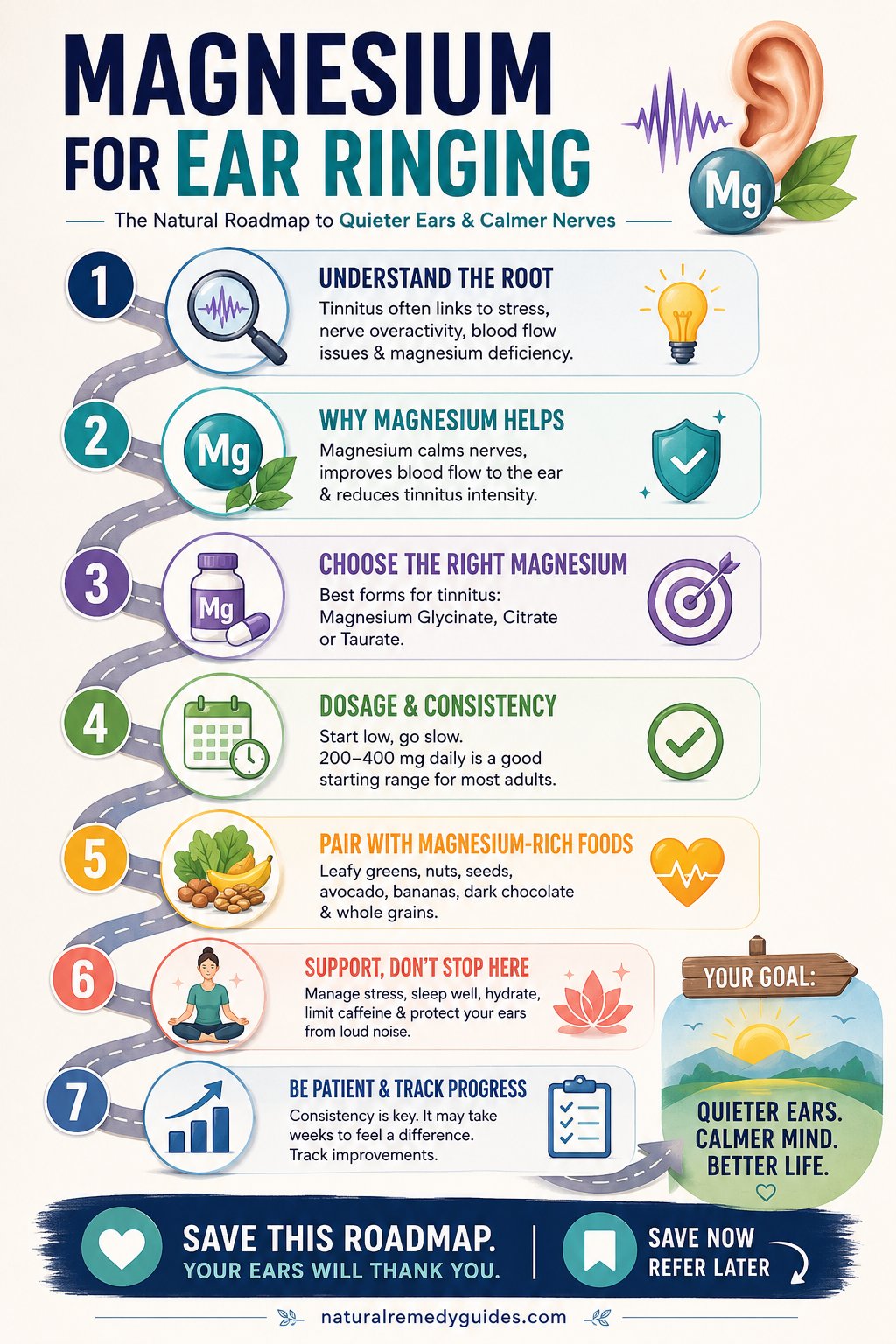
What it is: Using magnesium for ear ringing is an evidence-backed nutritional strategy that restores essential mineral balance to calm overactive nerve cells in your auditory system.
Does it work: Yes, particularly when ringing or sound sensitivity is tied to chronic stress, noise trauma, or age-related mineral depletion. Clinical studies demonstrate that restoring bioavailable magnesium protects the delicate hair cells in your inner ear from damage.
The evidence: Published studies in ear and hearing research reveal that magnesium acts as a natural calcium channel regulator and glutamate blocker in the cochlea, preventing nerve cells from misfiring phantom ringing sounds.
Verdict: Take 300 to 400 mg of Magnesium Glycinate or L-Threonate daily. Avoid cheap magnesium oxide (which passes right through you). For enhanced results, combine magnesium with targeted nerve-calming botanicals (such as NeuroQuiet).
Using magnesium for ear ringing has emerged as one of the most promising, drug-free nutritional moves in hearing science. If you lie awake at night listening to an irritating hum, hiss, or high-pitched squeal that nobody else can hear, you know how maddening it is. It wears down your patience. But here's what many doctors overlook: over half of all adults run chronically low on magnesium. And your delicate auditory nerves are often the first place that deficiency screams for help.
Most sufferers are told to "just live with it" or drown it out with white noise. Don't settle for that. In many cases, ear ringing is an electrical signal misfire. When auditory cells run out of magnesium, their biological brakes fail. Nerve cells lock in an open circuit, firing continuous phantom static straight into your auditory cortex.
Soothe Auditory Nerves & Reclaim Quiet
Discover NeuroQuiet for Auditory Support →Clinically informed ear nourishment • 60-day satisfaction guarantee
How Magnesium for Ear Ringing Works as Your Natural "Volume Control"
To understand why magnesium helps quiet ear ringing, imagine it as your inner ear's biological volume limiter. Inside your ear, sound waves are converted into electrical pulses through an exchange of calcium and magnesium:
- The Calcium Surge: When noise enters your ear, calcium rushes into hearing nerve cells to trigger an electrical signal.
- The Magnesium Reset: Magnesium's job is to step in immediately, push calcium back out, and tell the nerve to relax until the next real sound arrives.
- The Exhaustion Loop: When your magnesium levels are depleted, calcium remains trapped inside the cells. Auditory nerves become hyper-excitable, firing non-stop static that your brain interprets as a phantom ring.
Comparing Different Magnesium Forms for Ear Health
| Magnesium Form | Bioavailability | Best Used For | Verdict for Ear Health |
|---|---|---|---|
| Magnesium Glycinate | High (bonded to calming glycine) | Nerve relaxation, evening calm, muscle ease | Top Choice: Extremely gentle on the digestive tract; excellent nerve absorption |
| Magnesium L-Threonate | High (crosses blood-brain barrier) | Brain function, memory, central auditory pathways | Top Choice: Penetrates directly into brain tissue where auditory signals are processed |
| Magnesium Citrate | Moderate | Digestive regularity, general mineral intake | Moderate: Good absorption, but higher doses can cause loose stools |
| Magnesium Oxide | Very Low (approx. 4% absorption) | Cheap laxatives, antacids | Avoid: Passes right through your intestines without reaching your inner ear |
Magnesium for Ear Ringing: Pros & Cons
Why It Makes Sense
- Addresses the underlying cellular excitability behind auditory static
- Promotes deeper, more restorative sleep and lower bedtime stress
- Completely non-habit forming with zero groggy morning after-effects
- Supported by clinical ear trauma and hearing preservation studies
What to Keep in Mind
- Takes 6 to 12 weeks of daily supplementation to replenish depleted cellular stores
- Cheap drugstore forms (oxide) cause diarrhea rather than hearing relief
- Best results occur when combined with hearing cofactors like Zinc and B-vitamins
How to Maximize Results with a Synergistic Formula
While taking a clean Magnesium Glycinate is an excellent starting point, hearing researchers have found that combining magnesium with protective antioxidants produces far superior results. Formulas like NeuroQuiet pair bioavailable minerals with standardized Ginkgo, Zinc, and Alpha Lipoic Acid to nourish the microvascular capillaries and nerve coatings simultaneously.
If you're tired of living with constant background buzz and want to give your auditory nerves the building blocks they need, starting a daily routine with a 60-day satisfaction guarantee gives you ample time to evaluate your progress risk-free.
Frequently Asked Questions About Magnesium for Ear Ringing
Which form of magnesium is most effective for ear ringing and tinnitus?
Magnesium Glycinate and Magnesium L-Threonate are the two best choices. Glycinate is bonded to the calming amino acid glycine and is very gentle on the stomach. L-Threonate has the unique ability to cross the blood-brain barrier directly into the central auditory pathways.
How does magnesium help quiet phantom sounds in the ears?
When you are deficient in magnesium, calcium rushes unchecked into auditory nerve cells, causing them to fire rapidly and create phantom noise. Magnesium acts as a natural gatekeeper, blocking excess calcium and calming overactive auditory signals.
How long does it take for magnesium supplementation to help ear ringing?
Because nerve tissue takes time to stabilize and replenish depleted cellular stores, clinical trials show that consistent daily supplementation for 8 to 12 weeks provides the most noticeable relief.
Reclaim Quiet and Calm in Your Daily Life
Check NeuroQuiet Availability & Pricing →60-day money-back guarantee • Synergistic auditory nerve support
Clinical References & Otology Studies
- Clinical Otolaryngology & Allied Sciences: Attias J, et al. Oral magnesium intake reduces permanent hearing threshold shift in human subjects (PMID: 15533151).
- Frontiers in Neuroscience: Le Prell CG, et al. An Oral Combination of Vitamins A, C, E, and Mg(++) Improves Auditory Function and Preserves Sensory Hair Cells (PMID: 30108480).
- Antioxidants: Choi J, et al. Oral Antioxidant Vitamins and Magnesium Limit Noise-Induced Hearing Loss in Clinical Settings (PMID: 33255728).
- Magnesium Research: Sendowski I. The role of magnesium in otology and inner ear pathology (PMID: 42439044).
FDA Disclaimer: These statements have not been evaluated by the Food and Drug Administration. This product is not intended to diagnose, treat, cure, or prevent any disease.
Independent Wellness Research & Editorial Standards
Our Wellness Research Approach: We explore publicly available scientific literature, nutritional research, botanical studies, and traditional wellness practices to help readers understand natural supplements and healthy lifestyle habits. Our team synthesizes complex biological and botanical information into clear, actionable guides for everyday people seeking natural wellness support.
Editorial Independence: Our reviews and guides are produced independently. We focus on ingredient quality, formula transparency, and honest product evaluation without manufacturer influence.
Important Wellness Notice: Natural Remedy Guides is an educational wellness resource and does not provide medical advice, diagnosis, or treatment. Dietary supplements are not intended to diagnose, treat, cure, or prevent any medical condition. Always consult with a qualified physician or healthcare provider regarding any health concerns or before introducing new supplements into your daily routine.