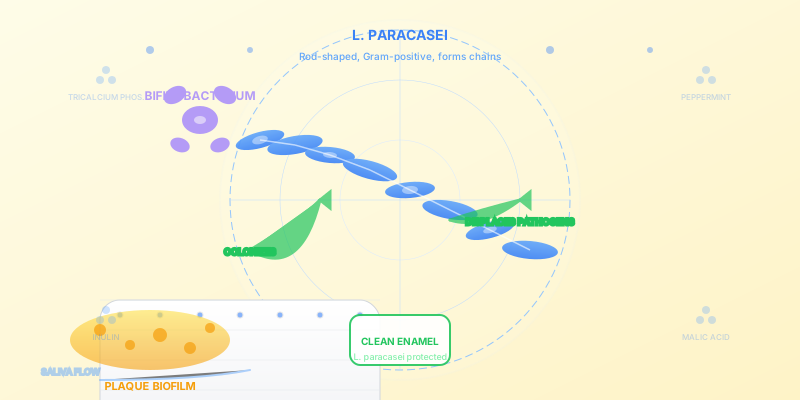
Not all probiotics are created equal — and not all reach the oral cavity alive. Lactobacillus paracasei is among the few strains with documented oral colonization, caries-pathogen inhibition, and gingival inflammation reduction in human trials. Here's what makes this strain distinct.
Learn MoreWhy L. paracasei for Oral Wellness?
- Lactobacillus paracasei is a Gram-positive, rod-shaped lactic acid bacterium that naturally inhabits the human oral cavity and gastrointestinal tract. Unlike many probiotic strains that fail to survive oral transit, L. paracasei demonstrates:
- Acid and bile tolerance — survives stomach passage to reach the oral cavity
- Adhesion to salivary pellicle and enamel — colonizes the dental biofilm
- Bacteriocin production — inhibits Streptococcus mutans and other cariogenic pathogens
- Anti-inflammatory signaling — reduces IL-1β and TNF-α in gingival tissue
Mechanisms: How It Supports Teeth & Gums
- The strain operates through multiple complementary pathways:
- Competitive exclusion — L. paracasei adheres to the same binding sites on enamel that S. mutans uses, physically displacing the primary cavity-causing organism.
- Acid neutralization — lactic acid production lowers local pH just enough to inhibit aciduric pathogens without demineralizing enamel (unlike S. mutans, which produces acid at pH <5.5).
- Biofilm disruption — produces exopolysaccharides that interfere with pathogen biofilm architecture, making plaque easier to remove mechanically.
- Immune modulation — reduces pro-inflammatory cytokines (IL-1β, IL-6, TNF-α) in gingival crevicular fluid, supporting periodontal wellness.
Synergy with Bifidobacterium & Prebiotics
- L. paracasei works best in a multi-strain matrix with complementary organisms and prebiotic fuel:
- Bifidobacterium species (B. lactis, B. longum) colonize different niches — the gingival sulcus and interdental spaces — extending the protective biofilm coverage.
- Inulin (chicory root fiber) selectively feeds beneficial oral bacteria while not feeding S. mutans, which lacks the fructanase enzyme to metabolize it.
- Malic acid stimulates salivary flow, enhancing natural remineralization and clearing acid challenges faster.
- Tricalcium phosphate provides calcium and phosphate ions directly at the enamel surface for remineralization support.
- Peppermint and spearmint oils provide antimicrobial volatile compounds and fresh breath — but the real work is done by the probiotic colonization.
What to Look For in an Oral Probiotic
- Strain specificity matters. Generic "Lactobacillus" on a label tells you nothing. Look for:
- Lactobacillus paracasei (specific strain designation, e.g., Lpc-37, GMNL-133, or similar)
- ≥1 billion CFU per serving at time of expiration (not just manufacture)
- Chewable or lozenge format — ensures oral contact time for colonization
- Multi-strain formula with Bifidobacterium species for niche coverage
- Prebiotic inclusion (inulin, FOS) to fuel establishment
- No sugar, artificial sweeteners, or antimicrobial preservatives that kill the probiotic
Key Takeaways
- L. paracasei is one of the few probiotic strains with documented oral colonization and S. mutans inhibition
- Works through competitive exclusion, pH modulation, biofilm disruption, and immune signaling
- Best delivered as a chewable/lozenge with prebiotics (inulin) and complementary Bifidobacterium strains
- Strain-level specificity and CFU at expiration are non-negotiable for efficacy