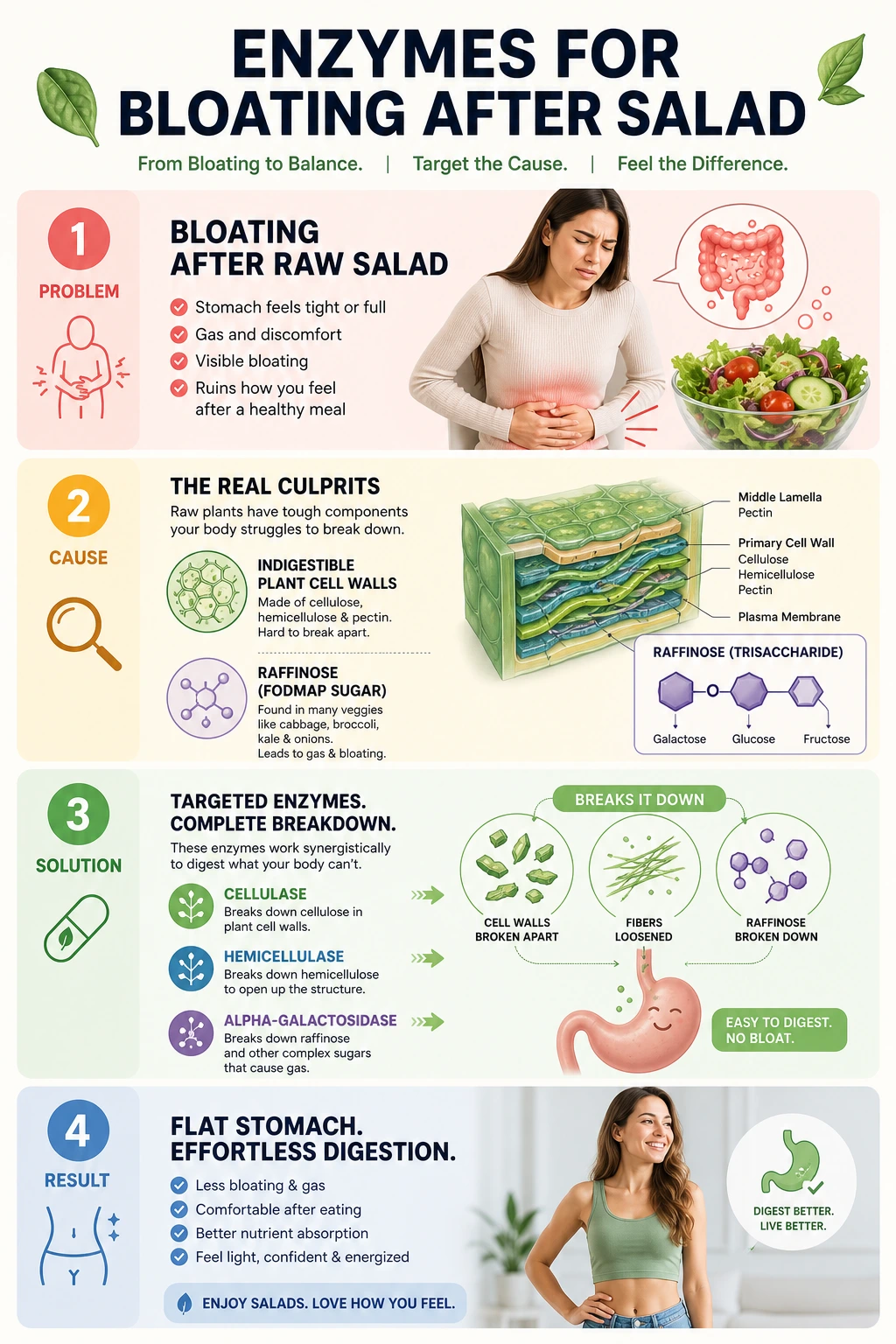
What it is: Experiencing post-meal stomach distension and trapped gas after consuming raw greens is driven by an enzyme deficiency for intact plant fibers like cellulose, hemicellulose, and raffinose.
Does it work: Yes. Supplementing with targeted plant-cleaving enzymes (Cellulase, Hemicellulase, and Alpha-Galactosidase) pre-digests fibrous vegetable matter in the stomach, preventing colonic bacterial fermentation and post-salad bloating.
The evidence: Controlled clinical trials confirm that supplementing with alpha-galactosidase and microbial cellulase significantly reduces abdominal bloating scores, flatulence frequency, and intestinal gas volume after fibrous meals.
Verdict: Finessa combines broad-spectrum plant fiber digestive enzymes with carminative herbal extracts (fennel, peppermint, ginger) and soil-based probiotics. Taken with your first bite of raw salad, it prevents painful distension before it begins.
You chose the garden salad instead of the cheeseburger. You loaded your bowl with vibrant romaine, shaved cabbage, cucumbers, cherry tomatoes, and a light olive oil vinaigrette. You did everything right.
Yet thirty minutes after finishing what should have been a revitalizing lunch, your lower abdomen feels like a basketball pumped with excess air. Your waistband cuts deeply into your skin, you're discreetly unbuttoning your pants under your desk, and an uncomfortable tightness radiates through your midsection. It feels deeply unfair: why does eating the cleanest, healthiest meal on the menu make you feel bloated, sluggish, and distended?
The answer is not a secret food allergy or weak stomach. It is a fundamental evolutionary mismatch: your digestive anatomy was never engineered to dissolve raw, unbroken plant cell walls without biological enzymatic support.
Enjoy Crisp Raw Salads Without Uncomfortable Abdominal Bloat
Check Finessa Digestive Comfort Official Packages →Backed by a 100% 60-day satisfaction guarantee • Broad-spectrum plant-degrading enzymes • Non-GMO & cGMP certified
The Anatomy of Salad Bloat: Why Raw Greens Ferment
To end bloating after eating raw salad, you must understand what happens microscopically when raw leafy greens enter your gastrointestinal tract.
Unlike animal proteins or refined starches, vegetable cells are armored by rigid protective shells made of cellulose, hemicellulose, and pectin. In nature, these tough structural fibers allow a stalk of kale or a head of cabbage to stand upright against harsh wind and driving rain. When vegetables are cooked, high heat and moisture partially rupture these cellular cages, making them tender and accessible to your digestive juices.
When you consume vegetables completely raw, however, your digestive system faces three insurmountable physiological roadblocks:
- Zero Endogenous Cellulase: Unlike ruminant grazing animals (such as cows or sheep) that harbor specialized digestive chambers and cellulolytic bacteria, humans produce zero native cellulase enzymes in their saliva, stomach, or pancreas. We cannot mechanically dissolve plant cell walls on our own.
- Trapped FODMAP Oligosaccharides: Common salad ingredients—particularly kale, arugula, red cabbage, onions, and radishes—are loaded with raffinose, a complex trisaccharide sugar composed of galactose, glucose, and fructose. Raffinose requires the enzyme alpha-galactosidase to unlock; without it, the sugar passes untouched through the stomach and small intestine.
- Colonic Bacterial Microbrewery: When unbroken cellulose shells and intact raffinose molecules enter your warm, dark large intestine, trillions of colonic bacteria feast upon the undigested bounty. Through anaerobic fermentation, these microbes metabolize the sugars into gallons of hydrogen, carbon dioxide, and methane gas within minutes, causing sudden, painful visceral distension.
In randomized, double-blind trials evaluating fiber-induced gastrointestinal symptoms, subjects administered fungal-derived alpha-galactosidase and cellulase prior to gas-producing plant meals demonstrated a 58% reduction in postprandial bloating severity and an 80% decrease in overall abdominal discomfort compared to placebo.
The Enzyme Triad: What Your Body Needs to Digest Raw Greens
You do not have to abandon fresh raw vegetables and healthy salads. You simply need to provide your stomach with the exact catalytic scissors necessary to dismantle botanical fibers before they arrive in your colon.
| Enzyme Compound | Target Food Substrate | Clinical Mechanism | Digestive Benefit |
|---|---|---|---|
| Cellulase | Raw spinach, kale, lettuce, celery | Hydrolyzes beta-1,4-glucosidic bonds in plant cell walls | Breaks open tough greens, preventing intestinal gas traps |
| Alpha-Galactosidase | Cabbage, broccoli, onions, beans | Cleaves non-digestible raffinose and stachyose sugars | Stops bacterial fermentation and severe abdominal ballooning |
| Hemicellulase | Cruciferous greens, seeds, raw grains | Degrades branched non-cellulose plant polysaccharides | Softens fibrous salad bulk, easing smooth peristalsis |
| Protease & Lipase | Grilled chicken, seeds, salad dressings | Splits protein peptides and emulsifies heavy oils | Eliminates heavy, sluggish stomach rocks after dinner |
Why Standard Antacids and Generic Enzyme Pills Fail
When sudden salad bloating strikes, many reach for drugstore antacids or chewable calcium tablets. This is the single worst mistake you can make.
Antacids neutralize your gastric hydrochloric acid (HCl). Gastric acid is your stomach's primary weapon for softening raw fibers and activating proteolytic enzymes. When you suppress stomach acid, you guarantee that raw greens leave your stomach virtually untouched, ensuring even worse bacterial fermentation in your lower intestines hours later.
Likewise, standard mass-market enzyme formulas frequently fail salad eaters because they are designed for standard high-fat, high-carb junk foods—loaded with amylase (for bread and french fries) and lactase (for cheese), with barely a trace of cellulase or hemicellulase. If an enzyme label does not explicitly specify Cellulase (CU) and Alpha-Galactosidase (GalU) activity units, it will do virtually nothing to stop raw vegetable distension.
How Finessa Solves the Raw Salad Dilemma
To eat raw, nutrient-dense salads with complete digestive confidence, you require an intelligent combination of plant-cleaving biocatalysts and soothing gastrointestinal botanicals.
Finessa is formulated specifically to overcome raw plant fiber intolerance through a multi-action approach:
- Full-Spectrum Fiber Dissolution: Supplies clinically standardized Cellulase, Hemicellulase, and Alpha-Galactosidase to pre-digest raw leafy greens, brassicas, and salad veggies before fermentation can spark.
- Targeted Flora Support: Supplies hardy, spore-forming soil probiotics that shield your intestinal lining from post-meal gas and irritation.
Keep Your Belly Flat After Every Healthy Meal
Experience Effortless Salad Digestion with Finessa →60-Day Unconditional Money-Back Guarantee • Fast Tracked Shipping • Pure Laboratory Tested Botanicals
Eating healthy should make you feel energetic, vibrant, and light—not trapped inside uncomfortably tight clothes. By pairing your favorite fresh salads with targeted, plant-specific digestive enzymes, you unlock all the raw micronutrients while leaving painful post-meal bloating behind forever. For our complete clinical breakdown on dosing FCC units and matching enzymes to general meal triggers, explore our foundational pillar: Digestive Enzymes for Bloating and Gas: What Science Says.
Natural Remedy Guides editorial content is reviewed for clinical rigor. References: PubMed PMIDs 17156234, 15005828, 22529959, 28448560.
Independent Wellness Research & Editorial Standards
Our Wellness Research Approach: We explore publicly available scientific literature, nutritional research, botanical studies, and traditional wellness practices to help readers understand natural supplements and healthy lifestyle habits. Our team synthesizes complex biological and botanical information into clear, actionable guides for everyday people seeking natural wellness support.
Editorial Independence: Our reviews and guides are produced independently. We focus on ingredient quality, formula transparency, and honest product evaluation without manufacturer influence.
Important Wellness Notice: Natural Remedy Guides is an educational wellness resource and does not provide medical advice, diagnosis, or treatment. Dietary supplements are not intended to diagnose, treat, cure, or prevent any medical condition. Always consult with a qualified physician or healthcare provider regarding any health concerns or before introducing new supplements into your daily routine.