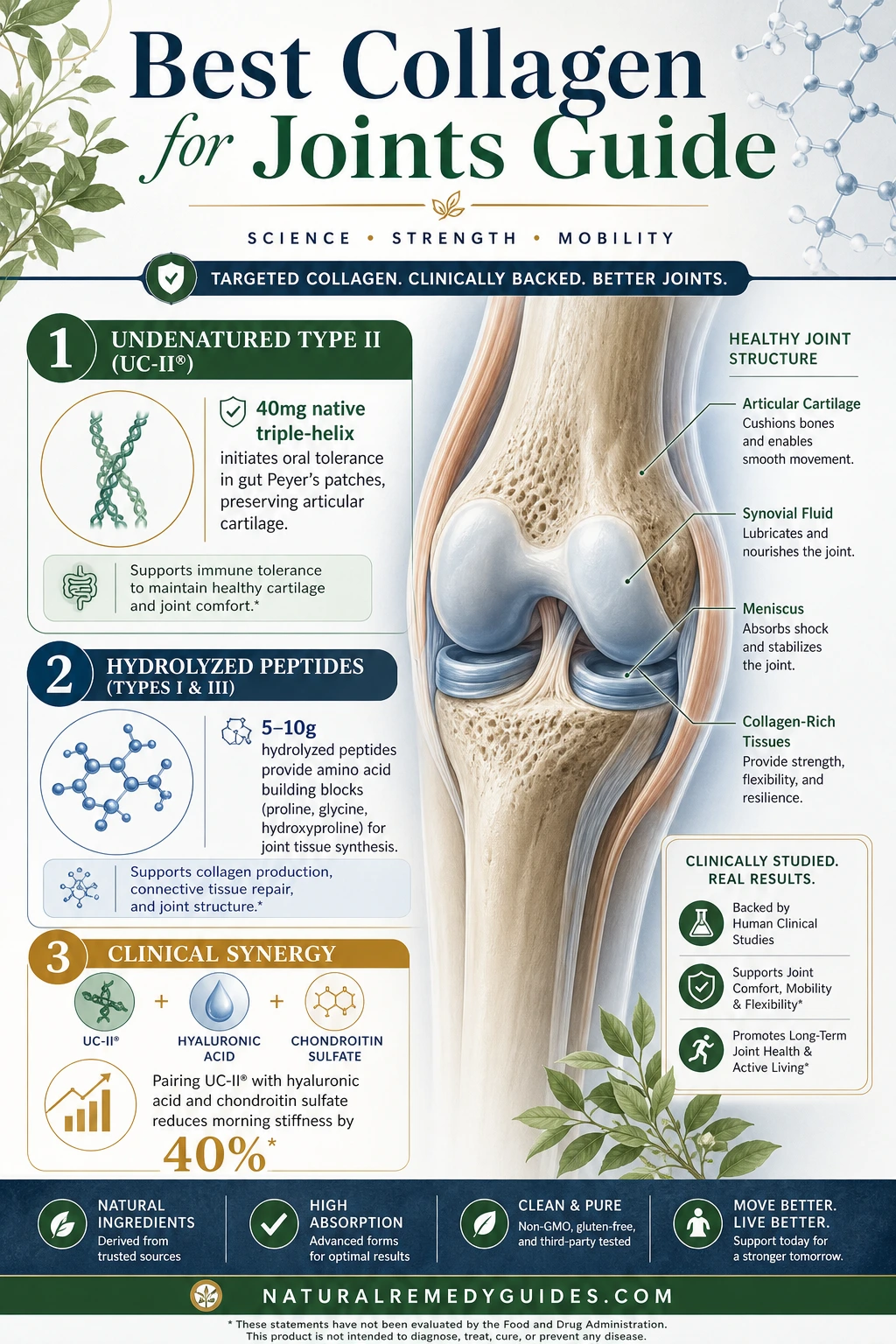
The Bottom Line: If you want the best collagen for joints, skip giant tubs of skin powders. Clinical tests confirm that 40 mg of native undenatured Type II collagen (UC-II) works through gut immune cells to shield cartilage. Meanwhile, hydrolyzed peptides supply raw tissue building blocks.
Who It Is Best For: Active adults and seniors with stiff morning knees, grinding joints, stairs friction, or thin cartilage who want joint care rather than beauty powders.
The Reality Check: Cartilage healing takes time. Plant extracts soothe morning stiffness in days. But true collagen remodeling takes eight to twelve weeks of steady daily support.
Finding the best collagen for joints often starts when daily movement begins to hurt. You get out of bed. Your knees creak. Your hips ache. Walking downstairs feels stiff and slow. You turn to supplements for relief. Long rows of tubs promise youthful skin, strong nails, and easy movement. It sounds great. But when you mix scoops of powder into your drink, your knees still hurt. Why is that?
The reason is simple. Not all collagens do the same job. Most powders in stores are made for skin. They pack ten grams of cowhide or fish scales into every scoop. That helps smooth wrinkles. But your knees are not made of skin. They are living shock absorbers. True joint cushioning needs distinct cartilage proteins.
Restore Fluid Joint Cushioning & Cartilage Mobility
Check JointEternal Formula & Direct Discounts →Backed by a 180-day money-back guarantee • All-natural multi-pillar joint & cartilage support
Cartilage Anatomy: Type II vs Type I Peptides
To choose the best collagen supplement for joints, you need to know how cartilage works. Science lists twenty-eight types of collagen in the human frame. Yet your joints focus on three.
Type I and Type III collagens make up ninety percent of body collagen. They build skin, hair, nails, and blood vessels. These fibers act like tough cables. They stretch and spring back. That makes them ideal for skin tone. But joint cartilage is quite different.
Articular knee and hip cartilage contains sixty percent undenatured type 2 collagen by dry weight. Type II fibers form a tight mesh. It works like a sponge. It holds water, chondroitin, and joint fluids between bones. When you step or jog, this cushion absorbs the shock. Without Type II collagen, the cushion dries out. Bones begin to rub on bone. Friction takes over.
Two Ways Collagen Aids Joint Comfort
When searching for collagen for joint pain, human trials split formulas into two separate groups:
1. Oral Tolerance: Native Undenatured Type II Collagen (UC-II)
Native Type II collagen does not feed amino acids to joints. It trains your immune system. Makers extract native collagen under low heat. This protects the triple helix shape of the protein.
You take a tiny 40 mg dose on an empty stomach. It moves past the stomach into your small gut. There, it meets Peyer's patches. These are immune checkpoints in the gut wall. The gut immune system reads the collagen shape. It marks the protein as safe.
This prompts the release of regulatory T cells. These friendly cells move through the blood to your joints. There, they send out calming signals. These signals tell harsh enzymes to stop breaking down your cartilage pad.
In human trials (PMID: 24153020), 40 mg of native Type II collagen increased pain-free joint range and knee flexibility during exercise. In a large trial (PMID: 26822714), native Type II collagen beat the old pair of glucosamine and chondroitin on joint comfort and stiffness scores over 180 days.
2. Structural Building Blocks: Hydrolyzed Collagen Peptides
The second option uses hydrolyzed collagen for joints. Here, natural enzymes cut large collagen chains into small bits. Your gut takes up these small peptides quickly into the blood.
These peptides deliver lots of glycine, proline, and hydroxyproline. They act like fresh wood sent to a home build. Joint cells take up these amino acids from the blood to weave new tissue.
A 24-week trial at Penn State University (PMID: 18416885) found that 10 grams of collagen hydrolysate reduced joint ache in athletes during walking, standing, and lifting. Medical reviews (PMID: 30368550) show that absorbed peptides gather in joint cartilage, helping cells build fresh joint padding.
Picking the Best Type of Collagen for Joints
Deciding which choice fits your day depends on how your joints feel. This side-by-side guide shows how the main forms compare:
| Collagen Type | Protein Form | Daily Dose | How It Works | Best Goal |
|---|---|---|---|---|
| Native Type II (UC-II) | Undenatured triple helix | 40 mg once daily | Oral tolerance in gut immune cells | Morning knee stiffness & worn cartilage |
| Hydrolyzed Bovine | Types I & III peptides | 5 to 10 grams daily | Delivers raw building blocks | Tendon care & post-run recovery |
| Marine Collagen | Type I small peptides | 3 to 5 grams daily | Moves into deep skin layers | Skin moisture & line smoothing |
| Glucosamine & Chondroitin | Natural aminosugars | 1,500 mg / 1,200 mg | Holds water in cartilage sponge | Long-term cushion support |
Why Collagen Alone Cannot Fix Dry Joints
Taking type 2 collagen for joint pain is a vital step. Yet relying on collagen alone leaves out key pieces. Your joints are closed fluid chambers. To keep them moving freely, you must meet three needs at once:
- 1. Cartilage Cushioning: Native Type II collagen protects the shock pad that stops bone-on-bone grind.
- 2. Joint Fluid Lubrication: Low-molecular hyaluronic acid acts like fresh oil. It coats cartilage so joints glide without friction.
- 3. Cooling Friction Heat: Pure Boswellia and Curcumin calm natural enzyme flares. This cools stiffness so new cartilage stays safe.
When joint stiffness slows your day, complete formulas like JointEternal combine these structural proteins, fluids, and soothing herbs into one daily mix.
Support Your Joints with Multi-Pillar Science
Learn More About the Complete JointEternal Formula →100% natural ingredients • 180-day 100% money-back guarantee • Made in an FDA-registered cGMP facility
Daily Protocol: How to Take Collagen for Joint Stiffness
To get the best results from your joint routine, small steps count. Follow these simple tips:
- Take Native Type II on an Empty Stomach: Native collagen works through gut immune sensors. Take your 40 mg capsule first thing in the morning with plain water. Food in the gut blocks immune contact.
- Pair Peptides with Vitamin C: If you take hydrolyzed powders, drink them with lemon water or Vitamin C. Your cells need Vitamin C to turn amino acids into sturdy collagen strands.
- Give Cartilage Ninety Days to Mend: Cartilage has no direct blood flow. Nutrients move in slowly as you walk. Give your body at least eight to twelve weeks to feel lasting ease.
- Keep Heat Away from Native Collagen: Never dissolve native Type II collagen capsules into hot coffee or tea. High temperatures damage the delicate protein structure. That heat destroys the immune training benefit. Use cool water instead.
The Bottom Line on Best Collagen for Joints
If your joints ache when walking or your knees feel tight every morning, stop using basic skin powders. Look for targeted formulas that deliver the best collagen for joints with studied undenatured type 2 collagen. Pair your collagen with hyaluronic acid and plant extracts. That complete approach keeps your joints moving freely for years to come.
Independent Wellness Research & Editorial Standards
Our Wellness Research Approach: We explore publicly available scientific literature, nutritional research, botanical studies, and traditional wellness practices to help readers understand natural supplements and healthy lifestyle habits. Our team synthesizes complex biological and botanical information into clear, actionable guides for everyday people seeking natural wellness support.
Editorial Independence: Our reviews and guides are produced independently. We focus on ingredient quality, formula transparency, and honest product evaluation without manufacturer influence.
Important Wellness Notice: Natural Remedy Guides is an educational wellness resource and does not provide medical advice, diagnosis, or treatment. Dietary supplements are not intended to diagnose, treat, cure, or prevent any medical condition. Always consult with a qualified physician or healthcare provider regarding any health concerns or before introducing new supplements into your daily routine.