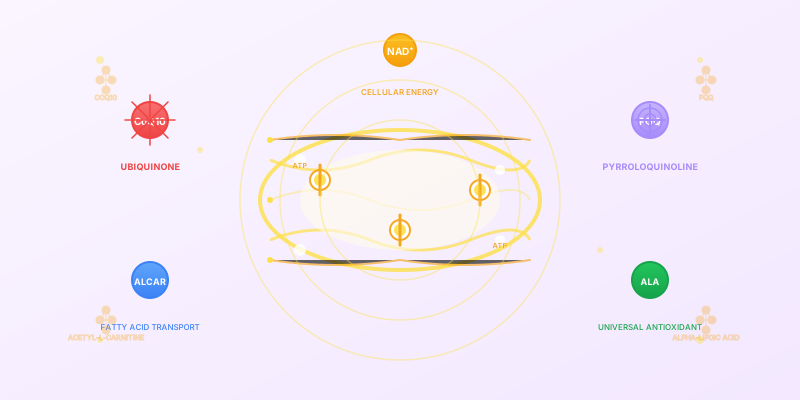
Mitochondrial function declines with age — less ATP, more oxidative damage, reduced fatty acid oxidation. The acetyl-L-carnitine + alpha-lipoic acid stack targets both sides of the equation: ALCAR restores substrate transport into mitochondria; ALA restores the antioxidant capacity that protects mitochondrial DNA and proteins. Here's what the evidence supports for dosing, forms, and synergy.
Learn MoreWhy This Combination? The Two-Bottleneck Problem
- Mitochondrial energy production has two rate-limiting bottlenecks that worsen with age:
- Substrate transport — fatty acids cannot enter mitochondria without carnitine palmitoyltransferase I (CPT1), which requires acetyl-L-carnitine as a carrier. ALCAR levels decline ~20% per decade after 30.
- Antioxidant defense — mitochondrial DNA is 10x more vulnerable to oxidative damage than nuclear DNA. Alpha-lipoic acid regenerates glutathione, vitamin C, vitamin E, and CoQ10 — the primary defense network protecting mtDNA.
- ALCAR + ALA addresses both simultaneously: more fuel in, less damage out. This is why the combination outperforms either alone in aging models.
Acetyl-L-Carnitine: The Mitochondrial Shuttle
- ALCAR is the acetylated form of L-carnitine — the acetyl group allows it to cross the blood-brain barrier, which plain L-carnitine cannot do efficiently. Key mechanisms:
- Transports long-chain fatty acids across the inner mitochondrial membrane for β-oxidation (ATP production from fat)
- Acetyl group donates to acetylcholine synthesis — supports cognitive function and neuromuscular junction signaling
- Reduces mitochondrial membrane lipid peroxidation by maintaining cardiolipin content
- Clinical dosing: 1,000–2,000 mg daily (divided doses) for cognitive and metabolic support; 500–1,000 mg for general mitochondrial maintenance
Alpha-Lipoic Acid: The Universal Antioxidant Regenerator
- ALA (specifically the R-isomer) is unique among antioxidants — it's both water- and fat-soluble, crosses the blood-brain barrier, and regenerates four other antioxidants:
- Reduces oxidized glutathione (GSSG → GSH) via dihydrolipoamide dehydrogenase
- Regenerates vitamin C from dehydroascorbate
- Regenerates vitamin E from tocopheroxyl radical
- Regenerates CoQ10 from ubiquinone to ubiquinol
- Chelates transition metals (iron, copper) that catalyze Fenton reactions in mitochondria
- Clinical dosing: 300–600 mg daily (R-ALA preferred; racemic mixtures require ~2x dose for equivalent R-ALA exposure)
Synergy with CoQ10, PQQ & NAD+ Precursors
- The ALCAR + ALA stack creates the foundation. For comprehensive mitochondrial support, three cofactors amplify the effect:
- CoQ10 (ubiquinol) — the mobile electron carrier in Complex I/II → III. Statin use, aging, and mitochondrial disease deplete it. Ubiquinol form has 3–4x better absorption. Typical: 100–200 mg daily.
- PQQ (pyrroloquinoline quinone) — stimulates mitochondrial biogenesis via PGC-1α pathway. Creates new mitochondria, not just optimizing existing ones. Typical: 10–20 mg daily.
- NAD+ precursors (NMN, NR) — NAD+ is the electron acceptor for glycolysis, TCA cycle, and β-oxidation. Levels drop ~50% by age 50. NMN/NR restore NAD+ pools, activating sirtuins (SIRT1, SIRT3) for mitochondrial quality control. Typical: 250–500 mg NMN or 300–1,000 mg NR daily.
Key Takeaways
- ALCAR solves the fatty acid transport bottleneck; ALA solves the antioxidant regeneration bottleneck
- Use R-ALA (not racemic) for 2x potency; acetyl-L-carnitine (not plain L-carnitine) for brain access
- Dosing: 1,000–2,000 mg ALCAR + 300–600 mg R-ALA daily (divided doses)
- Add CoQ10 (ubiquinol), PQQ, and NAD+ precursors for comprehensive mitochondrial support