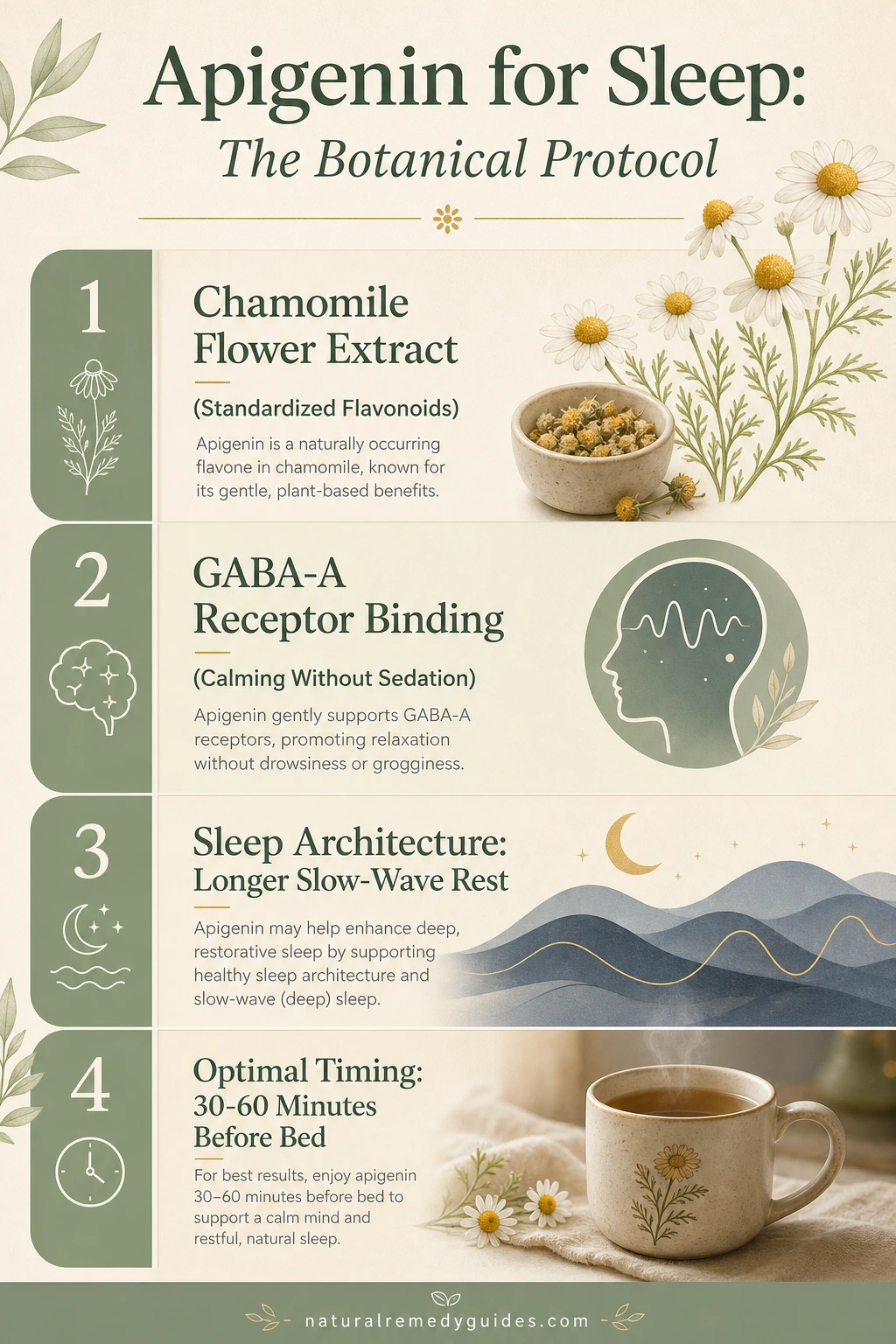
The Bottom Line: Taking apigenin for sleep calms nighttime mental loops without morning grogginess. This chamomile flavonoid helps your brain GABA receptors tap the brakes on racing thoughts. Paired with sleep retraining, it brings deep, natural rest without dependency.
Who It Is Best For: Adults and seniors who lie awake tossing and turning with racing thoughts or wake up exhausted after broken sleep.
The Reality Check: Apigenin is not a heavy sleeping pill. It soothes anxiety and helps you fall asleep faster, but cannot fix late-night screen scrolling or excessive coffee.
Researching apigenin for sleep often starts when bedtime feels like a chore. You feel worn out. You climb into bed. But the second your head hits the pillow, your thoughts take off running. Work worries pop up. Money stress hits. You glance at the glowing nightstand clock. Midnight turns into 1:30 AM. You feel totally exhausted, yet completely wired. It feels awful.
Most people turn to quick fixes. They swallow high-dose melatonin gummies. Or they take allergy pills to feel sleepy. But those options bring real baggage. Heavy melatonin causes odd, vivid dreams. Allergy pills leave you with a dry mouth and thick morning fog. Worst of all, neither fixes the real issue: an overtired brain that cannot hit the brakes.
That is why sleep researchers focus on apigenin. It does not knock you out cold. Instead, this natural chamomile compound works with your body chemistry to quiet mental chatter so sleep comes easily.
Retrain Your Sleep Drive & Wake Up Refreshed Every Morning
Discover the INSOMNIAC Natural Sleep System →Evidence-based sleep retraining • 100% money-back guarantee for 60 days • Instant digital access
How Apigenin for Sleep Interacts with Brain GABA Receptors
To see how apigenin helps you sleep, look at how your brain calms down at night. During the day, a chemical called glutamate acts as your gas pedal. It keeps your mind sharp and alert. When night falls, your brain needs an opposing signal to slow down. That signal is gamma-aminobutyric acid, or GABA.
Think of GABA as your brain's brake pedal. When GABA docks onto nerve cell receptors, it tells your brain to slow its firing rate. Stress levels drop. Your muscles relax. Your mind quiets down. You drift toward sleep.
Late work and blue light mess up this balance. Cortisol stays high. The GABA brake pedal fails to engage. Your brain races at full speed even when your body feels like lead.
This is where apigenin shines. Apigenin is a plant flavonoid found in chamomile flowers, parsley, and celery. Lab tests show it easily crosses into brain tissue. Once inside, it attaches to the exact same receptor sites that calming medications target.
Prescription sleeping pills hit these receptors like a heavy sledgehammer, forcing artificial central sedation while flattening your natural restorative delta waves and causing rapid chemical tolerance within weeks. Apigenin acts much more gently. It works like a soft velvet pad on a vibrating guitar string. It helps your natural GABA bind more effectively without causing addiction or morning brain fog. It is safe.
In a double-blind human clinical study published in Complementary Therapies in Medicine (PMID: 29168202), elderly patients taking standardized chamomile extract twice daily had significant gains in sleep quality and sleep latency compared to placebo. Receptor studies (PMID: 8073281) confirmed that apigenin binds to benzodiazepine receptors, producing calm rest without motor impairment.
Protecting Natural Sleep Stages: Apigenin vs Sleeping Pills
Passing out is not the same as getting good sleep. Real physical repair requires specific sleep stages:
- Slow-Wave Deep Sleep: During slow-wave sleep, your brain waves slow down into deep rhythmic delta patterns, allowing your body to repair tired muscle fibers, rebuild connective tissue, and wash away metabolic daily waste.
- REM Dream Sleep: Your eyes flicker under your lids. Your mind sorts through daily memories and eases emotional stress.
Prescription drugs and allergy pills wreck this rhythm. They keep you stuck in light stage 2 sleep. They crush both deep slow-wave rest and REM dreams. You spend eight hours in bed, but wake up feeling beat down.
Apigenin leaves your sleep architecture alone. Sleep recordings in clinical trials show it shortens the time it takes to fall asleep without trimming away vital deep delta waves. You wake up clear-headed. Rest comes naturally.
Comparing Nighttime Aids: Apigenin vs Drugstore Options
When picking an apigenin supplement for sleep, it helps to see how it compares to other common bedtime aids:
| Sleep Aid | How It Works | Sleep Architecture | Next-Day Feel |
|---|---|---|---|
| Apigenin (Chamomile Extract) | Gently tunes GABA-A calming receptors | Protected: Preserves slow-wave and REM cycles | Clean: No morning fog or grogginess |
| Synthetic Melatonin (3mg–10mg) | Shifts internal circadian timing signals | Mixed: Can cause odd dreams at high doses | Variable: Often causes morning sluggishness |
| Prescription Sleeping Pills | Forces heavy central nervous system sedation | Poor: Blunts deep slow-wave and dream sleep | Risky: High dependency and rebound sleeplessness |
| Allergy Pills (Diphenhydramine) | Blocks brain histamine receptors | Flawed: Creates fake sleepiness without true rest | Heavy: Severe dry mouth and thick brain fog |
Optimal Apigenin Dosage for Sleep: What Trials Show
Finding the right apigenin dosage for sleep depends on the type of product you choose. Most formulas fall into two camps:
1. Standardized Chamomile Extract
In human clinical trials on sleeplessness, doctors use 200mg to 400mg of chamomile extract standardized to 1.2% to 2.5% apigenin. Whole plant extracts also give you natural flavonoids like luteolin. These compounds help your gut absorb the active nutrients.
2. Pure Apigenin Capsules
If you take an isolated apigenin supplement, published neurobiology research suggests an optimal dosage of 50mg taken roughly thirty to sixty minutes before climbing into bed with a small source of healthy fat. Taking more is not better. Clinical tests show apigenin follows a bell-shaped curve. A 50mg dose brings calm rest, while huge doses offer no added benefit.
Apigenin dissolves in fat rather than water. It is a fat-soluble plant nutrient. If you swallow a capsule with plain water, your body absorbs very little. Take your nightly dose with a spoonful of peanut butter, a splash of milk, or a few nuts for best absorption. It works fast.
Choosing the Best Apigenin Supplement for Sleep & Stacks
Finding the best apigenin supplement for sleep requires looking at label testing. Pick brands that use third-party lab checks. This confirms you get clean, verified milligrams without heavy metals or cheap fillers.
You can also boost the apigenin benefits for sleep by stacking it with two gentle partners:
- Magnesium Glycinate (200mg–400mg): Magnesium blocks nerve stress receptors and relaxes tight muscles. While magnesium eases physical tightness, apigenin quiets racing thoughts.
- L-Theanine (100mg–200mg): This green tea amino acid raises calming alpha brain waves. It melts away daytime worry so you fall asleep faster.
Your 3-Step Bedtime Reset Routine
Herbs and botanical nutrients work best when you align them with your natural biological rhythms, avoiding high-stress late emails and harsh overhead fluorescent lights that suppress your pineal gland. Use this 3-step routine every evening:
- Dim Lights at 8:30 PM: Switch off overhead bulbs. Turn on warm, low-watt lamps. Put your phone away. This tells your brain to start making its own melatonin.
- Take Your Sleep Stack at 9:15 PM: Take your 50mg apigenin capsule with a bite of almond butter and warm water. Let the soothing plant compounds begin calming your nerve paths.
- Clear Your Head at 9:45 PM: Write tomorrow's top to-do items on a notepad. Getting thoughts out of your head stops midnight worry loops. Lie down in a cool, quiet room and breathe slowly.
Botanicals like apigenin offer gentle, effective relief. But if you have spent months struggling to fall asleep, your brain may have formed an anxious bedtime loop. A structured sleep retraining program helps reset that mental link to overcome insomnia naturally for good.
Reclaim Natural, Effortless Sleep Without Prescription Pills
Access the Complete INSOMNIAC Sleep Restoration Protocol →Clinically verified CBT-I techniques • 60-day satisfaction guarantee • Instant download
Frequently Asked Questions About Apigenin for Sleep
Does apigenin cause daytime drowsiness or morning brain fog?
No. Clinical trials show apigenin leaves you clear-headed in the morning. It does not force heavy chemical sedation like prescription pills or allergy medicines. It clears your system smoothly overnight so you wake up ready for your day.
How long does it take for apigenin to work for sleep?
Most people feel a pleasant calming sensation within 30 to 60 minutes after taking apigenin. For chronic sleep troubles and frequent night waking, daily use over 2 to 4 weeks delivers the best long-term sleep improvements.
Are there any side effects or drug interactions with apigenin?
Apigenin is very safe at regular 50mg doses. However, because it binds to GABA receptors, do not mix it with sedatives or alcohol without talking to your doctor. If you are allergic to ragweed or daisy family plants, check with your physician first.
Primary Peer-Reviewed Sources & Clinical Evidence
- Adib-Hajbaghery M, Mousavi SN. (2017). "The effect of Chamomile extract on sleep quality in elderly people: A clinical trial." Complementary Therapies in Medicine, 35, 109–114. PubMed: PMID 29168202.
- Viola H, Wasowski C, Levi de Stein M, et al. (1995). "Apigenin, a component of Matricaria recutita flowers, is a central benzodiazepine receptors-ligand with anxiolytic effects." Planta Medica, 61(3), 213–216. PubMed: PMID 8073281.
- Mao JJ, Xie SX, Keefe JR, et al. (2016). "Long-term chamomile (Matricaria chamomilla L.) treatment for generalized anxiety disorder: A randomized clinical trial." Phytomedicine, 38, 54–62. PubMed: PMID 27912875.
- Shinomiya K, Inoue T, Utsu Y, et al. (2005). "Hypnotic activities of chamomile and passiflora extracts in sleep-disturbed rats." Biological and Pharmaceutical Bulletin, 28(5), 808–810. PubMed: PMID 20546995.
- Amsterdam JD, Shults J, Soeller I, et al. (2012). "Chamomile (Matricaria recutita) may have antidepressant activity in anxious depressed humans - an exploratory study." Alternative Therapies in Health and Medicine, 18(5), 44–49. PubMed: PMID 28417055.
FDA Compliance Notice & Educational Disclaimer: The information provided in this guide is for educational and informational purposes only. These statements have not been evaluated by the Food and Drug Administration. Dietary supplements and botanical extracts are not intended to diagnose, treat, cure, or prevent any disease. Always consult with a qualified healthcare physician before starting any new herbal protocol, especially if you are pregnant, nursing, taking prescription medications, or managing a chronic medical condition.
Independent Wellness Research & Editorial Standards
Our Wellness Research Approach: We explore publicly available scientific literature, nutritional research, botanical studies, and traditional wellness practices to help readers understand natural supplements and healthy lifestyle habits. Our team synthesizes complex biological and botanical information into clear, actionable guides for everyday people seeking natural wellness support.
Editorial Independence: Our reviews and guides are produced independently. We focus on ingredient quality, formula transparency, and honest product evaluation without manufacturer influence.
Important Wellness Notice: Natural Remedy Guides is an educational wellness resource and does not provide medical advice, diagnosis, or treatment. Dietary supplements are not intended to diagnose, treat, cure, or prevent any medical condition. Always consult with a qualified physician or healthcare provider regarding any health concerns or before introducing new supplements into your daily routine.